
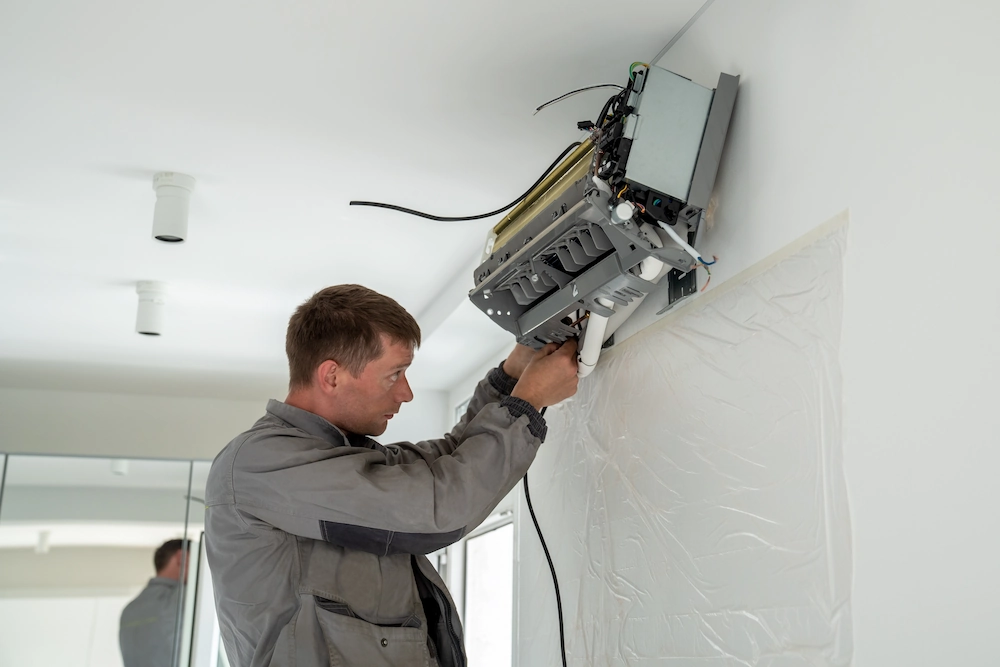
When your air conditioner stops working properly, it can quickly turn your comfortable home into an uncomfortable sauna. Common air conditioner problems include strange noises, weak airflow, warm air blowing, frequent cycling, water leaks, and high energy bills. For simple issues like dirty filters or thermostat problems, you can often fix them yourself. However, for electrical issues, refrigerant leaks, frozen coils, or compressor failures, it’s best to call a professional repair technician right away.
Table of Contents
Identifying Common Air Conditioner Problems
Before you can fix a problem, you need to know what’s wrong. Let’s look at the most common air conditioner problems you might face at home.
Strange Noises Coming From Your AC
Is your air conditioner making weird sounds? Different noises can mean different problems:
- Banging or clanking: This might mean loose or broken parts inside the unit.
- Squealing: Often points to belt issues or motor bearing problems.
- Bubbling or hissing: Could indicate a refrigerant leak, which is serious.
- Clicking: Normal when turning on and off, but constant clicking might mean a failing thermostat or electrical control.
Any unusual noise is a warning sign that something isn’t right with your AC system.
Poor Airflow Issues
Weak airflow is one of the most common air conditioner problems. When you put your hand near a vent and feel only a light breeze, several issues could be to blame:
- Clogged air filters blocking proper air movement
- Dirty evaporator coils reducing cooling efficiency
- Fan problems preventing air circulation
- Blocked or leaky ductwork limiting air distribution
Poor airflow not only makes your home less comfortable but also forces your system to work harder, using more energy.
AC Blowing Warm Air
When your AC blows warm air instead of cool, it defeats the whole purpose of having an air conditioner! This frustrating problem could be caused by:
- Low refrigerant levels due to leaks
- Dirty condenser coils outside your home
- Compressor issues preventing proper cooling
- Thermostat problems or incorrect settings
This is one of the common air conditioner problems that might require professional help, especially if refrigerant needs recharging.
Frequent Cycling On and Off
Does your AC turn on and off more often than it should? This “short cycling” wastes energy and puts extra wear on your system. Causes include:
- Oversized air conditioning unit for your space
- Dirty or failing condenser unit outside
- Electrical problems affecting the control board
- Low refrigerant levels causing pressure changes
Short cycling can significantly shorten your AC’s lifespan if not addressed quickly.
Water Leaks and Moisture Issues
Water around your indoor unit or dripping from ceiling vents isn’t normal. These moisture problems might be due to:
- Clogged condensate drain line
- Broken condensate pan collecting water
- Refrigerant leaks (which can look like water)
- Frozen evaporator coils that later thaw and leak
Besides damaging your home, moisture creates perfect conditions for mold growth, which can affect your family’s health.
High Energy Bills
Have you noticed your electricity bills climbing even though you haven’t changed how you use your AC? This often indicates your system is working harder than it should. Common causes include:
- Dirty filters restricting airflow
- Refrigerant leaks reducing efficiency
- Duct leaks wasting cooled air
- Aging system losing efficiency over time
An efficient AC should maintain a steady energy usage pattern. Sudden increases often point to developing problems.
DIY Fixes for Simple AC Issues
Not all common air conditioner problems require a professional. Here are some issues you can often fix yourself:
Replacing or Cleaning Air Filters
Dirty air filters are behind many AC problems. They restrict airflow, reduce efficiency, and make your system work harder. To fix this:
- Turn off your AC system completely.
- Locate the filter (usually in the return air duct or the indoor unit).
- Remove the old filter carefully.
- Either clean it (if reusable) or replace it with a new one of the same size.
- Make sure it’s inserted in the correct direction (look for arrows).
You should check your filters monthly and replace or clean them every 1-3 months, depending on usage and household conditions like pets or dust.
Checking and Setting Your Thermostat
Sometimes the problem isn’t with your AC at all—it’s with the thermostat. Try these steps:
- Make sure it’s set to “cool” mode and at a temperature below your current room temperature.
- Replace batteries if your thermostat is battery-powered.
- Clean the inside gently with a soft brush if it looks dusty.
- Check that it’s level on the wall (some thermostats won’t work properly if tilted).
If you have an older manual thermostat, consider upgrading to a programmable or smart model for better temperature control and energy savings.
Clearing Debris Around Outdoor Units
Your outdoor condenser unit needs good airflow to work properly. Over time, leaves, dirt, and debris can build up around it. To fix this:
- Turn off power to the unit at the breaker box.
- Remove any visible debris like leaves, twigs, or trash.
- Clear at least 2 feet of space around all sides of the unit.
- Trim back any plants growing too close.
- Gently clean the exterior fins with a soft brush (brush vertically, not horizontally).
This simple maintenance can prevent several common air conditioner problems and improve efficiency.
Checking Circuit Breakers
If your AC won’t turn on at all, the problem might be electrical:
- Locate your home’s circuit breaker panel.
- Find the breakers labeled for your AC system (usually two: one for the indoor unit and one for the outdoor unit).
- Check if either has tripped to the “off” position.
- If so, flip it all the way off, then back to the “on” position.
If the breaker trips again immediately, don’t reset it. This indicates a serious electrical problem that needs professional attention.
When to Call a Professional for AC Repair
While DIY fixes work for simple issues, some common air conditioner problems require professional help. Here’s when to pick up the phone:
Electrical Issues and Wiring Problems
Electricity is dangerous, and AC systems use a lot of it. Call a professional immediately if:
- You notice burning smells coming from your AC
- Circuit breakers trip repeatedly when the AC runs
- The system makes buzzing or electrical sounds
- You see any sparks or smoke
Electrical problems can cause fires or damage expensive components. They’re never worth trying to fix yourself.
Refrigerant Leaks
Refrigerant is the lifeblood of your AC system. If levels are low, it’s because there’s a leak that needs fixing. Signs include:
- AC blowing warm air despite running
- Hissing sounds from the indoor or outdoor unit
- Ice forming on the refrigerant lines or evaporator coil
- System taking longer than usual to cool your home
Refrigerant requires special handling, tools, and certification to work with safely. It’s also harmful to the environment if not properly managed.
Frozen Evaporator Coils
If you see ice on your indoor unit, it means your evaporator coil is frozen. While you should turn off the system to let it thaw, you’ll need a pro to fix the underlying cause, which could be:
- Refrigerant leaks
- Restricted airflow from dirty filters or blocked ducts
- Blower motor problems
- Damaged expansion valve
Continuing to run the system with frozen coils can damage the compressor, leading to much more expensive repairs.
Compressor Failures
The compressor is the heart of your AC system, and it’s also one of the most expensive parts to replace. Call a professional if:
- Your outdoor unit makes loud, unusual noises when running
- The system trips the circuit breaker when trying to start
- Your AC runs but doesn’t cool at all
- The outdoor unit vibrates excessively when running
Compressor problems are among the most serious common air conditioner problems and often require experienced technicians to diagnose and repair correctly.
Complete System Failures
If your AC won’t turn on at all, and you’ve already checked the thermostat and circuit breakers, it’s time to call for help. Complete system failures can stem from:
- Failed control boards
- Capacitor problems
- Motor burnouts
- Severe electrical issues
These problems require specialized testing equipment and expertise to diagnose and fix safely.
Preventing Common Air Conditioner Problems
The best way to deal with common air conditioner problems is to prevent them in the first place. Here’s how:
Regular Maintenance Schedule
Professional maintenance once or twice a year can catch problems before they become serious. A typical maintenance visit includes:
- Checking and adjusting refrigerant levels
- Cleaning coils and components
- Inspecting electrical connections
- Lubricating moving parts
- Testing system operation and controls
Spring is the ideal time for AC maintenance, before the heavy use of summer begins.
Monthly DIY Maintenance Tasks
Between professional visits, you can do these simple tasks monthly:
- Check and replace air filters
- Clear debris from around the outdoor unit
- Listen for unusual noises when the system starts
- Check that airflow from vents is strong and cool
- Make sure the condensate drain line is clear
These quick checks can help you spot common air conditioner problems early, when they’re easier and cheaper to fix.
Proper Use Habits
How you use your AC affects how well it works and how long it lasts:
- Don’t set the thermostat extremely low to try to cool faster (it doesn’t work and stresses the system)
- Use ceiling fans to help distribute cool air
- Close blinds or curtains during the hottest part of the day
- Don’t block vents with furniture or decorations
- Consider a programmable thermostat to reduce AC use when you’re away
These habits not only prevent problems but also save energy and money.
Cost Considerations for AC Repairs
When facing common air conditioner problems, cost is always a concern. Here’s what to know:
Repair vs. Replace Decisions
Sometimes it makes more financial sense to replace rather than repair. Consider replacement if:
- Your AC is over 10-15 years old
- The repair would cost more than 50% of a new system
- You’ve had multiple repairs in the past two years
- Your energy bills keep rising despite repairs
- Your system uses R-22 refrigerant (which is being phased out)
A new, efficient system might cost more upfront but save money through lower energy bills and fewer repairs.
Typical Repair Costs
Costs vary widely depending on the problem, but here are some ballpark figures:
- Replacing a capacitor: $150-$400
- Fixing a refrigerant leak: $200-$1,500
- Replacing a circuit board: $200-$600
- Fixing a broken fan motor: $200-$700
- Replacing a compressor: $1,000-$2,500
Always get multiple quotes for major repairs, and ask about warranties on parts and labor.
Warranty Considerations
Before paying for repairs, check if your system is still under warranty:
- Manufacturer warranties typically cover parts for 5-10 years
- Labor warranties from installers usually last 1-2 years
- Some warranties require proof of annual maintenance
- Extended warranties might cover some common air conditioner problems
Keep your warranty information and maintenance records in a safe place so you can access them when needed.
Choosing the Right AC Repair Service
When you need help with common air conditioner problems, choosing the right service provider matters:
Qualifications to Look For
Not all AC technicians are equally qualified. Look for:
- Proper licensing for your state or locality
- NATE (North American Technician Excellence) certification
- EPA 608 certification for handling refrigerants
- Manufacturer certifications for your specific brand
- Proof of insurance and bonding
Qualified technicians have the training to diagnose and fix problems correctly the first time.
Questions to Ask Before Hiring
Before committing to a service company, ask:
- “Do you provide free estimates?”
- “What warranties do you offer on parts and labor?”
- “How do you charge—flat rate or hourly?”
- “What steps do you take to protect my home during repairs?”
The answers will help you gauge their professionalism and commitment to customer service.
Red Flags to Watch For
Be cautious of repair companies that:
- Offer quotes over the phone without seeing your system
- Pressure you to make immediate decisions
- Have no physical address or very few online reviews
- Recommend replacing parts that aren’t related to your problem
- Can’t or won’t provide references
Trust your instincts—if something feels off, get a second opinion before proceeding with repairs.
Frequently Asked Questions About Common Air Conditioner Problems
Why does my air conditioner run constantly?
An AC that never shuts off could be dealing with several issues. It might be undersized for your space, meaning it can’t cool efficiently enough to reach the set temperature. Dirty filters, coils, or refrigerant leaks can also cause this problem by reducing cooling capacity. Check your thermostat settings first, then your filters. If those look good, you might need professional help to check refrigerant levels and system sizing.
Is it normal for my AC to make noise when starting up?
A brief, soft humming noise when your AC starts is normal. However, loud banging, screeching, or grinding noises are not. These sounds often indicate loose components, motor problems, or electrical issues. If your system makes unusual noises, especially if they’re getting louder over time, turn it off and call a professional to prevent further damage.
How often should I replace my air filters?
For standard 1-inch filters, replacement every 1-3 months is recommended. However, this varies based on several factors. Homes with pets, smokers, or high dust levels may need monthly changes. Larger, pleated filters might last 3-6 months. The best approach is to check your filter monthly and replace it when it looks dirty, regardless of time elapsed.
Why is my AC freezing up?
Ice on your AC coils or refrigerant lines indicates a problem. Common causes include restricted airflow from dirty filters or closed vents, low refrigerant from leaks, or running the AC when outdoor temperatures are too low. Turn off your system to let it thaw completely before restarting. If it freezes again, you’ll need professional service to address the underlying cause.
Can I just add more refrigerant to my AC?
No, you should never just add refrigerant. Unlike car gas, refrigerant doesn’t get “used up” during normal operation. If your system is low on refrigerant, it means there’s a leak that must be found and fixed. Adding refrigerant without fixing the leak is temporary, wasteful, and potentially harmful to the environment. Additionally, handling refrigerant requires EPA certification.
Why does my AC smell bad when running?
Different smells indicate different problems. Musty odors usually mean mold or mildew in the system or ducts. Burning smells could indicate electrical problems or overheating components. A sweet, chemical smell might be refrigerant leaking. Rotten egg smells could mean a dead animal in your ductwork. Any persistent odor warrants investigation, as some can indicate serious problems or health hazards.
How long should my air conditioner last?
With proper maintenance, most modern AC systems last 15-20 years. However, many factors affect lifespan, including usage patterns, local climate, installation quality, and maintenance frequency. Systems in coastal areas with salt air or desert regions with extreme heat may have shorter lifespans. Regular professional maintenance can help your system reach or even exceed its expected lifespan.
Is it worth repairing an older AC unit?
For units over 10 years old, you should weigh repair costs against replacement benefits. As a rule of thumb, if repairs would cost more than 50% of a new system’s price, or if your unit uses R-22 refrigerant (which is being phased out), replacement is often more economical. Newer systems are significantly more energy-efficient, potentially saving 20-40% on cooling costs compared to older models.
Conclusion: Staying Cool When AC Problems Arise
Common air conditioner problems don’t have to leave you sweating. By understanding the warning signs and knowing when to attempt DIY fixes versus calling a professional, you can keep your cool—literally and figuratively. Remember that regular maintenance is your best defense against unexpected breakdowns and expensive repairs.
When you do need professional help with common air conditioner problems, choose a qualified, reputable service provider who can diagnose issues correctly and fix them properly the first time. The right technician will not only solve your immediate problem but can also help prevent future issues through proper maintenance and advice.
Ready to Solve Your AC Problems?
Don’t wait until your air conditioner completely fails on the hottest day of the year. If you’re experiencing any of the common air conditioner problems we’ve discussed, contact Any Temp Heating and Cooling today to schedule an inspection. A small investment in maintenance or timely repairs now can save you from costly emergency service later—and keep your home comfortable all summer long.